November de 2026
KEREN LASME AND WENDIE ZAHIBO: FLYING THROUGH THE STARS, DANCING IN CHAOS
Keren Lasme e Wendie Zahibo
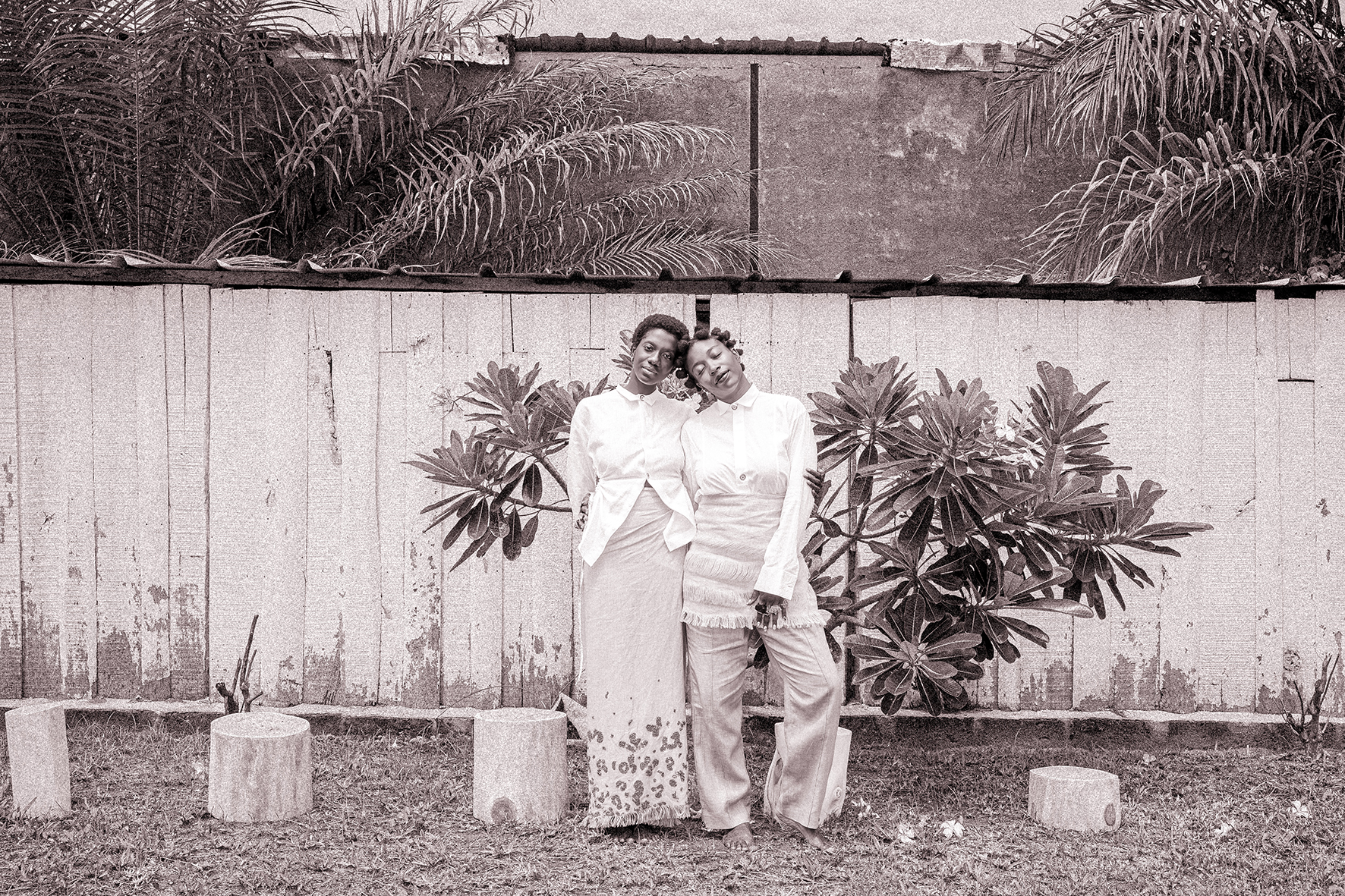
cover: Lasme (left) and Zahibo in the city of Grand-Bassam,
Côte d’Ivoire. Both are wearing pieces by the local fashion label Olooh Concept.
Photo: Yoanh Azema.
The living foundation of African peoples’ culture, history and ancestry, orality may be understood as the fundamental system through which the continent’s knowledge, beliefs and philosophies are preserved and transmitted. In Africa, the spoken word is more than a vehicle for communication: it possesses a vital force that embraces, heals, guides and reconnects people to their histories and ancestors. It is no coincidence, then, that orality was the medium chosen to bring together artist-researcher Keren Lasme and visual artist and poet Wendie Zahibo in the pages of issue 022 of Menelick 2Ato.
Members of the collective masonn, Lasme and Zahibo were invited to engage in an exchange that would allow them to delve deeper into some of the themes informing the collective’s research. Among these are the ways in which enslaved Black people inhabited the world, the immediate environments they occupied under conditions of enslavement, and the ancestral heritage they carried with them through displacement. As a case study, they proposed an exploration of la case et le jardin créole [the Creole dwelling and garden], which together embody a traditional way of life in what are known as the French Antilles. This exercise also reverberates with the thinking of contemporary intellectuals who inspire the work of the masonn collective—Suzanne Césaire, Ava DuVernay, Haile Gerima, Léna Blou and Olivier Marboeuf—whose practice is concerned with imagining ways of existing freely in the world and reflecting on the role of artists in shaping that world.
KEREN LASME: Wendie, I’d like us to begin and ground our conversation with one of Suzanne Césaire’s wildest dreams. In one of her essays published in Tropiques (1943), she imagined a world of tomorrow where millions of Black people would rise from the ashes and awaken to their true selves. I thought about this dream of hers this morning as I meditated in front of the vast blue Atlantic Ocean, sitting atop a cliff on the coast of Paraíba in Brazil—the easternmost point of the Americas, and thus, the closest point to Africa on this continent. I thought to myself that, like many of us Black people of African descent, I am a living proof of Suzanne Césaire’s dream. So I’d like to ask you: if you had to continue this dreaming legacy, what would be your wildest wish for us?
WENDIE ZAHIBO: To remember that the imagination is a space of freedom, a field of limitless possibilities, a place for dialogue with the invisible — with what we do not know, what we do not control. A garden of dreams, a nursery of hope and knowledge, a refuge where one can breathe and feel held. The chaos of the world, the unpredictability of human beings, the ravages of capitalism, imperialism, and all their consequences feed fear and despair. Yet the world is far vaster than what the eye alone believes it can see. To nourish, strengthen, loosen, and care for our individual and collective imagination by remembering what we already know — what is inscribed within us, what allows us to exist today, to breathe, and to continue shaping this world — are the struggles and visions of those who came before us. To make of our bodies liberated territories’ and give ourselves permission to fly. As Faith Ringgold said: ‘Anyone can fly. All you need is somewhere to go that you can’t get to any other way. The next thing you know, you’re flying among the stars.’
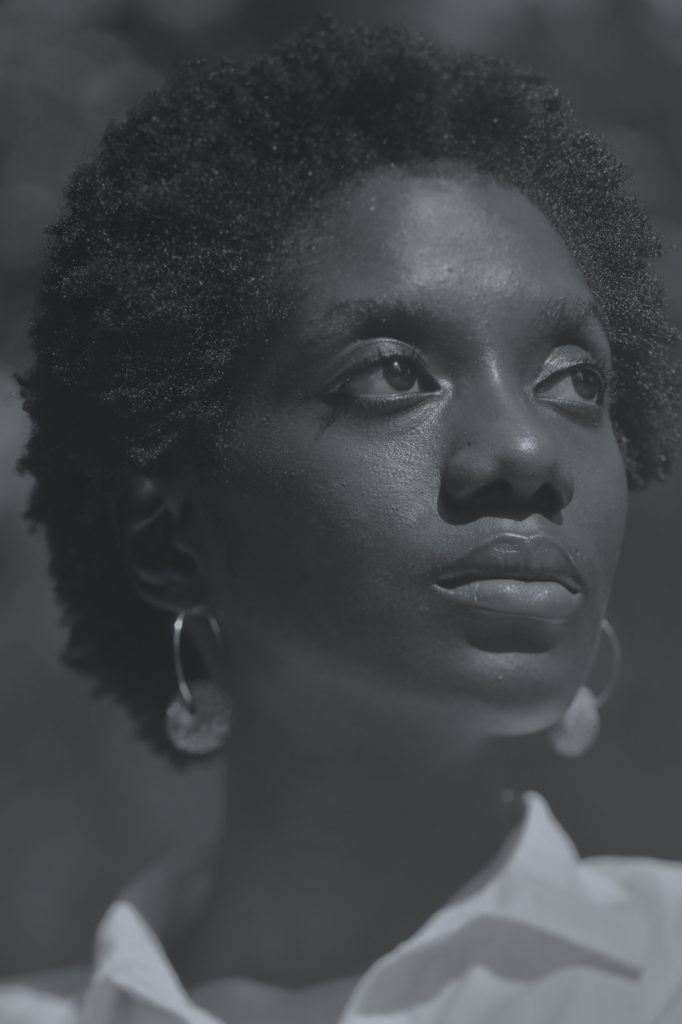
Keren Lasme (photo: Nuits Balnéaires)
KL: I love this idea of “flying among the stars” that ancestor Faith Ringgold is advancing. She is suggesting another way of navigating the world. I believe that this is what we are proposing with the exhibition we are having at Estação Cabo Branco in Jaõa Pessoa with our artists collective masonn. To go even further, it is more of an embodiment than a proposition. Each of us, the 7 members of the masonn collective composed of Anaïs Cheleux, Alejandra Loreto, RD/WL, Jeebrahil, Yoanh Azema, and the two of us, are affirming that we are breathing underwater and here are the healing stories we would like to share. Within each of them lies practices for inhabiting the world otherwise. This makes me think of la case creole and Lena Blou’s concept of karékò. Can you talk about them?
WZ: The cases escargots, also known as cases créoles, found in Guadeloupe and more broadly across the Caribbean, carry a complex history. These are modest dwellings, built with simple or salvaged materials, yet they reveal genuine ingenuity: modularity, climate adaptation, and a form of mobility. The aim is not to romanticize them, as they remained precarious, but to recognize the craftsmanship of those who managed to transform their conditions to invent spaces for living, movement, and at times, refuge. These forms of housing trace their origins to the Amerindian dwellings, later appropriated by European colonizers, before being inhabited by Afro-descendant populations during the transatlantic slave trade. They embody multiple and shifting memories, shaped by continuities, reinterpretations, and resistance.
It was by connecting them to Léna Blou’s concept of karékò that I came to an understanding. Karékò refers to a space of freedom within chaos, an inner refuge where the body itself becomes a home. Between la case and the karékò, there is this Caribbean way of inhabiting the world — bringing forth, even in constrained contexts, spaces that carry dignity, connection, and creativity.
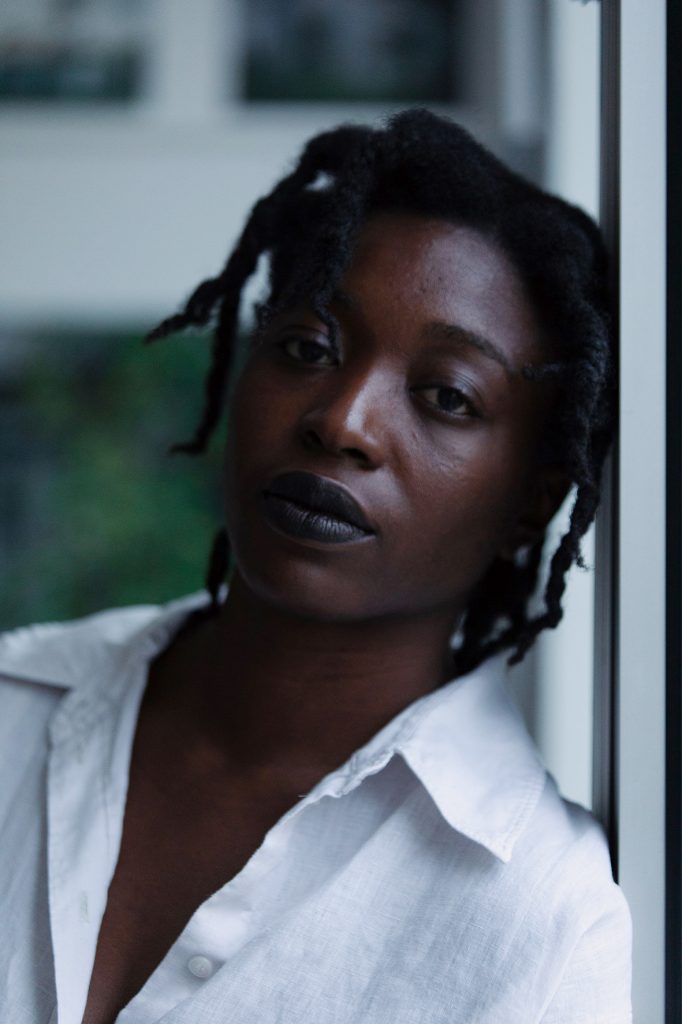
Wendie Zahibo (photo: Gael Rapon)
KL: I’d like to return to Haile Gerima’s idea of “liberated territories” that you mentioned earlier. How do you see it manifested inside masonn ?
WZ: I discovered Haile Gerima’s concept of liberated territories through an interview with filmmaker and producer Ava DuVernay. She explained how this idea shaped the DNA of her studio, by offering her collaborators a space to freely experiment with their creativity. This deeply resonated with me, as it echoed a question I was already exploring: How can we create spaces of freedom for Afro-descendant artists — spaces where imposed constraints are transcended to open up new possibilities?
That’s where masonn began: a project both individual and collective, rooted in vernacular architecture and mystical realism within the Black Atlantic. It’s driven by research and creation, and nourished by itinerant residencies with Afro-diasporic artists. One of the defining features of these residencies, for example, lies in the articulation between individual freedom and collective dynamics — a principle directly inspired by Haile Gerima. Each artist finds their place, develops their own unique language, while contributing to a shared synergy.
But this also requires careful attention to organization, communication, the tools we use, as well as to honesty and care. Three years after its inception, masonn has become a collective — and it happened organically.
Once again, the goal is not to idealize our relationships, nor to smooth things over as if everything always works perfectly. On the contrary: it’s about learning to dance collectively within the chaos. We come with different paths, life stories, personal, familial, and professional challenges. Yet within this space, we want to allow ourselves what the world so often tries to deny us.
Because the art world does not exist outside of capitalism, class struggle, racism, and the discrimination that runs through it. It is part of a Tout-Monde in which far-right ideologies are also rising, restricting our freedom. In response, we affirm the possibility of creating otherwise — drawing on Afro-descendant and Indigenous ancestral knowledges and practices that we invoke, and on the synchronization of our ancestors, as if, beyond time and borders, they had agreed to help us move forward, create, and inhabit the world differently.
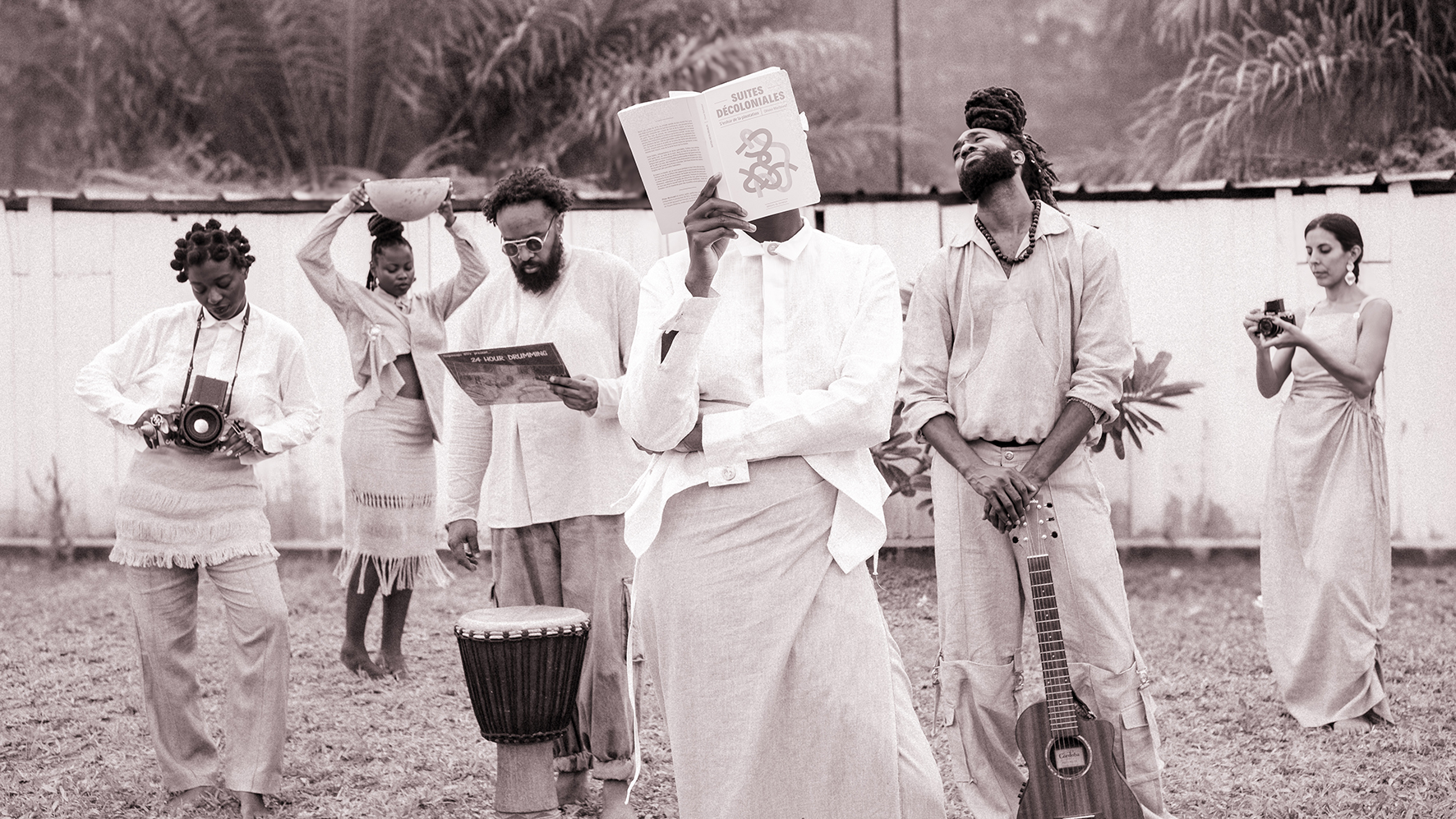
YOANH AZEMA
Suites Décoloniales
Photography
2025
KL: What are the tools you’ve used and strategies you developed along the way as you navigate the art world, grow your practice and build healthy relationships with art and cultural institutions?
WZ: I think I navigate the art world the same way I navigate the world. By being conscious of who I am and what I represent, as both an individual and collective body in the spaces I move through, in this time we’re living in. The artist I am is one and the same with the daughter, sister, friend, partner, collaborator, student, and associate that I also am.
The art world, like all sectors and spaces—whether intimate or public—is infused with the virus of capitalism, imperialism and colonialism. I try to remain lucid about the environments and dynamics that shape my surroundings. Where am I? Who is around me? Why am I here? What do I want? What do I not want? What are my values? What are my ambitions and my true intentions? These are the questions I regularly ask myself, where I strive to be honest, and that help me dance with the chaos. Whatever my relationships may be, I try to root them outside of domination, lies, exploitation, manipulation, and violence. Relationships where conflict does not prevent kindness, communication, and accountability. I don’t always succeed. Theory doesn’t lead to practice, but practice feeds theory. Nikki Giovanni tells us in Black Women Writers at Work by Claudia Tate: ‘If you’re not going to quit, play. You’ve got to do one or the other. And it’s got to be your choice. If you’re going to play, play all the way.’
My practice is a space of play. An individual and collective space of play. I love playing alone and with others. I love giving myself permission. I love adventure. I love stepping outside the frame. I love experimenting with freedom. I love what nourishes the body and the soul. I love learning and transmitting. I love what is seen and what is unseen—the visible and the invisible. I love life. These are the loves that nourish and accompany my practice.
KL: I wish for love and play to linger in the mind and heart of all those who will come across our conversation. Thank you so much for this moment of transmission Wendie. I wish us, the members of the collective masonn, the best in all our individual and collective endeavours. May the road open for us as we say in Aïzi! Aṣẹ.
+ About the masonn project
The masonn project was founded in 2022, emerging from Wendie Zahibo’s research into the vernacular architecture of Guadeloupe, with a particular focus on snail-shaped houses. The initiative subsequently expanded its scope to encompass research into Afro-descendant forms of habitation across the Black Atlantic, understood as living architectures shaped by displacement, constraint, invention and the formation of communities. The research then turned towards Brazil, focusing on earthen construction techniques (taipa and pau-a-pique), before moving to Grand-Bassam, Côte d’Ivoire, where the investigation extends to the legacy of colonial architecture and abandoned habitats, bringing to light the tensions between memory, use and disappearance. In parallel, masonn evolved as a collective, interdisciplinary process, gradually taking shape as a seven-member artistic collective comprising Wendie Zahibo, Keren Lasme, Anaïs Cheleux, Jeebrahil, RD/WL, Alejandra Loreto and Yoanh Azema. In this sense, masonn operates as a collective architecture in motion, in which research, creation and implementation unfold together through a situated, evolving and shared dynamic.