November de 2026
32° EAST – INSURRECTION, SOLIDARITY, AND COLLECTIVE LIBERATION IN KAMPALA
Teesa Bahana
photos MANDELACREW
32° East is a home for contemporary visual art, located in Kampala, the capital city of Uganda. We were founded in 2011 and since then have hosted over 100 local and international artists in residence. Our residency programme provides artists with the space and time to experiment without pressure of production, and with enough funds to cover their basic needs. Many of our alumni have gone on to be featured in international press, biennials, and credit 32 with helping them find their voice.
Our base of operations can be found in Kabalagala, a neighbourhood near Lake Nalubaale (Victoria), and includes 4 artist studios, a contemporary art library and co-working space. Our programme offers the visual arts community opportunities for connection through our monthly meet-ups and global networks, provides artists-in-residence with resources to advance their practice, and builds new audiences through Kampala’s longest-running contemporary art festival KLA ART.
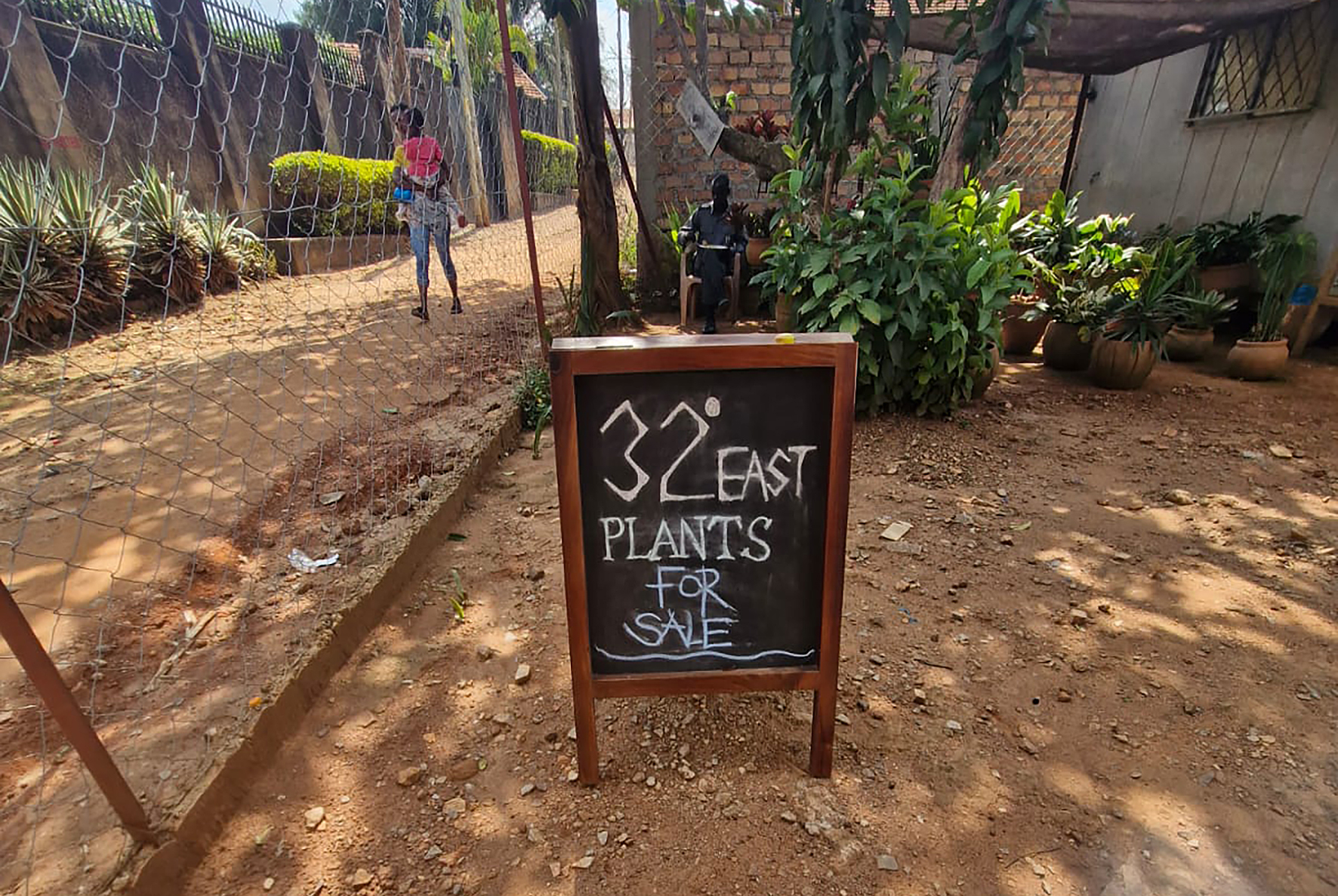
32° East is located on Sonko Close, a small unpaved road in a neighbourhood of Kampala.
We are currently in a moment of transition — midway through our journey to construct and complete our permanent home. By the time this process is complete, the 32° East Art centre will consist of 6 artist studios, a library, cafe, workshop, offices, gallery, walled-garden and two shops. From the financing and fundraising, to the construction process, to witnessing how people have received and interacted with the space, to imagining its future; the process of building 32° East has been more transformative than I could have anticipated, and has become a vehicle for thinking about the world in ways I couldn’t have imagined. And that is ultimately what has kept me here so long.
Let me try to paint a picture of the context in which we work. Decades of neoliberal policies in Uganda has led to a systematic undercutting of public services. And because we have one of the youngest populations in the world, the notion of what a public good even is, is a foreign concept for most of us in this country. When you have no thriving public arts infrastructure, no public funding, no museums that children grow up going to on field trips and spaces where citizens are encouraged to spend their free time, it becomes so much harder to convince people of art’s value, especially beyond its commercial value.
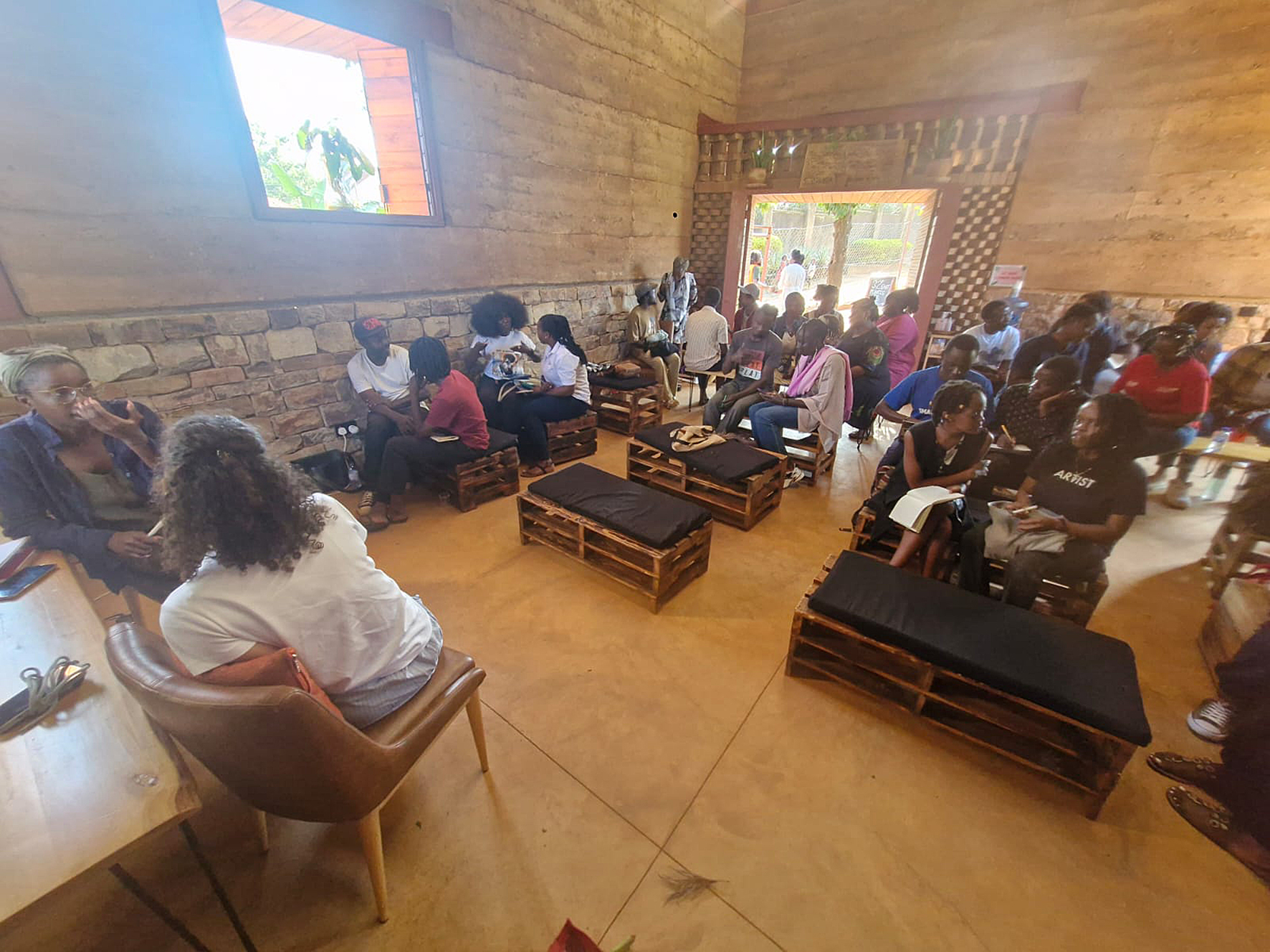
The contemporary art library on a day of encounters between local artists and international visitors.
We have no Ministry of Culture; art falls under the mandate of the Ministry of Gender, Labour and Social Development, and even there is predominately focused on artisans and craftsmanship. Our National Gallery is not well known or visited regularly by the general public, its location close to the State House means that its entrance is highly and intimidating. Art is also often dismissed as not being as important as the Sciences, with the president on record saying Arts courses are useless, and art educators frequently having to advocate to be paid the same as their peers.
And it’s not just arts infrastructure, it’s public space more broadly. Kampala specifically lacks free, accessible public spaces for people to gather from all walks of life. From our work on KLA ART, Kampala’s longest running public arts festival, we’ve heard from so many artists how this lack of public space affects how they relate to the city and how it influences how much (or how little) ownership they feel over the city.
At a glance, when you look at our organisation, you’ll see artist residencies, workshops, professional development opportunities. But when you look a little deeper you’ll see that ultimately our work is about ownership, belonging, and agency.
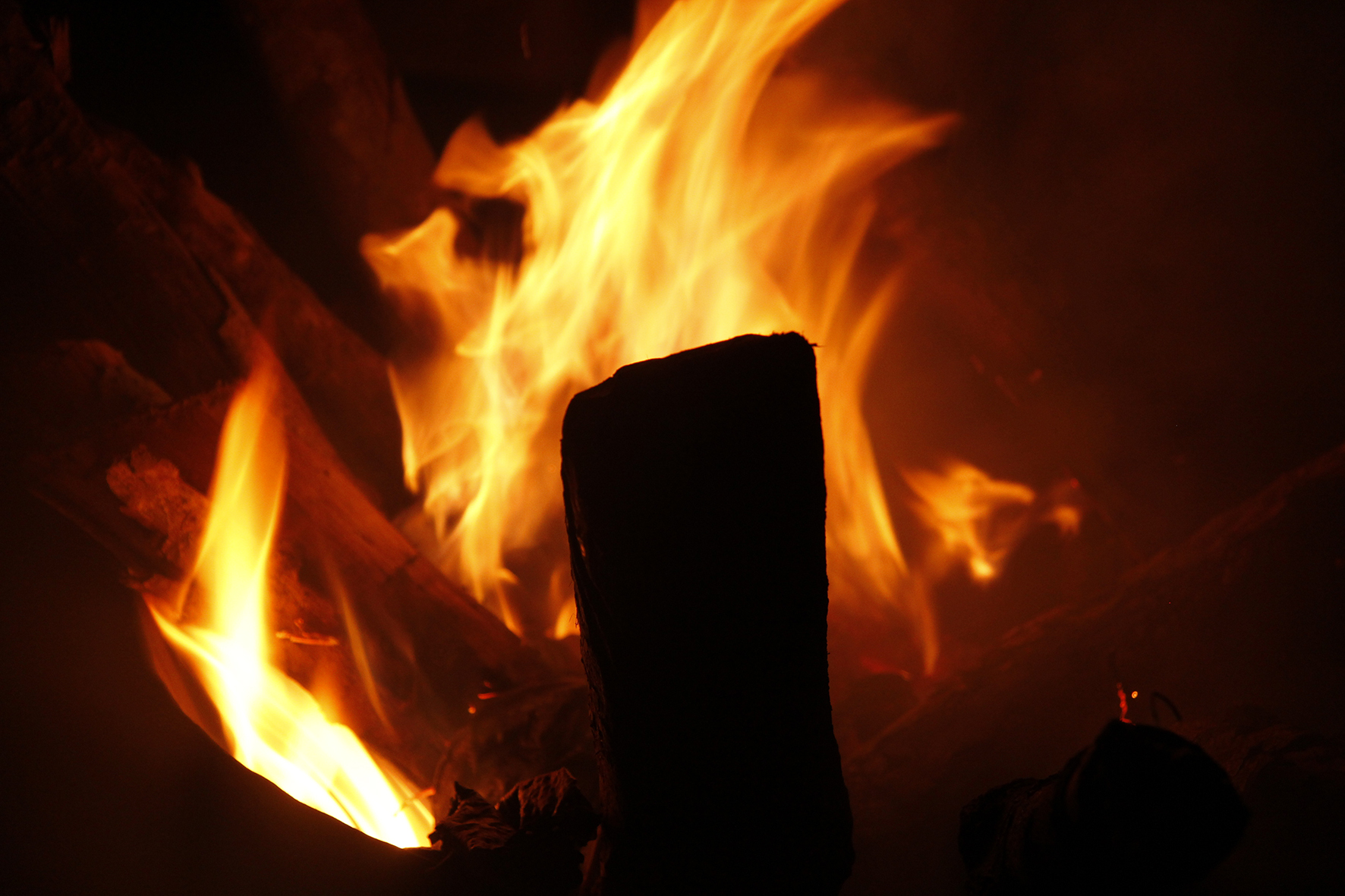
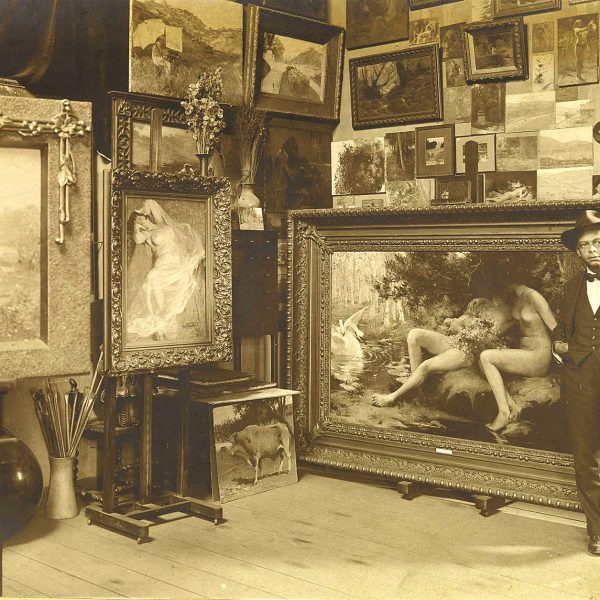
SERUBIRI MOSES Je Prends La Parole – Photography, 2014. Ugandan writer and curator based in New York, Serubiri Moses took part in one of 32° East’s artist residency programmes in 2013.
Working at 32 has vividly illustrated the desire that people have to have some agency over their own worlds, and the importance of providing them with opportunities to do so. I see this all the time, sometimes in unexpected places such as funding for example. We have held two crowdfunding campaigns to help fund construction of our centre, one in 2021 and another earlier this year, both of which brought in over $70,000 from over 400 people. It goes against conventional wisdom common among many companies who have asked us how our work is financially sustainable, how we are generating revenue, why we aren’t pushing the artists to make sales, how much more we could be maximinising our space to make more money. With both campaigns, I would constantly hear how glad people were to contribute towards something that provides a glimpse of a better future and feel like they actually had a role in making this future happen. From these experiences I’ve become much more interested in thinking about funding and fundraising as providing an opportunity for people to live out their values, rather than trying to convince people of our worth.
32° East is located on Sonko Close, a small, untarmacked road in a neighbourhood of Kampala. Sonko Close is representative of a lot of the smaller roads in Kampala, the thousands of veins and arteries that lead to nowhere but define the geography of our city. There is poor drainage, constant dust, and no waste management, with pedestrians thinking nothing of leaving their plastic bottles, or snack wrappers as they pass through. We started monthly clean-ups of the street, and honestly in a way it does very little. Hours later, another kaveera (plastic bag) makes its way back, then a dirty diaper, then a stray item of clothing, and soon the road looks like we were never there. I have in the past jokingly described our efforts as Sisyphean. But when I look back at photos from when we first moved in, there is a difference. Every month, everyone gathers a rubbish bag and a glove, and hits the road, knowing the impact is small but doing it anyway. Through this, the community feels like they are a part of something bigger, and that in this small way, they can influence their surroundings.
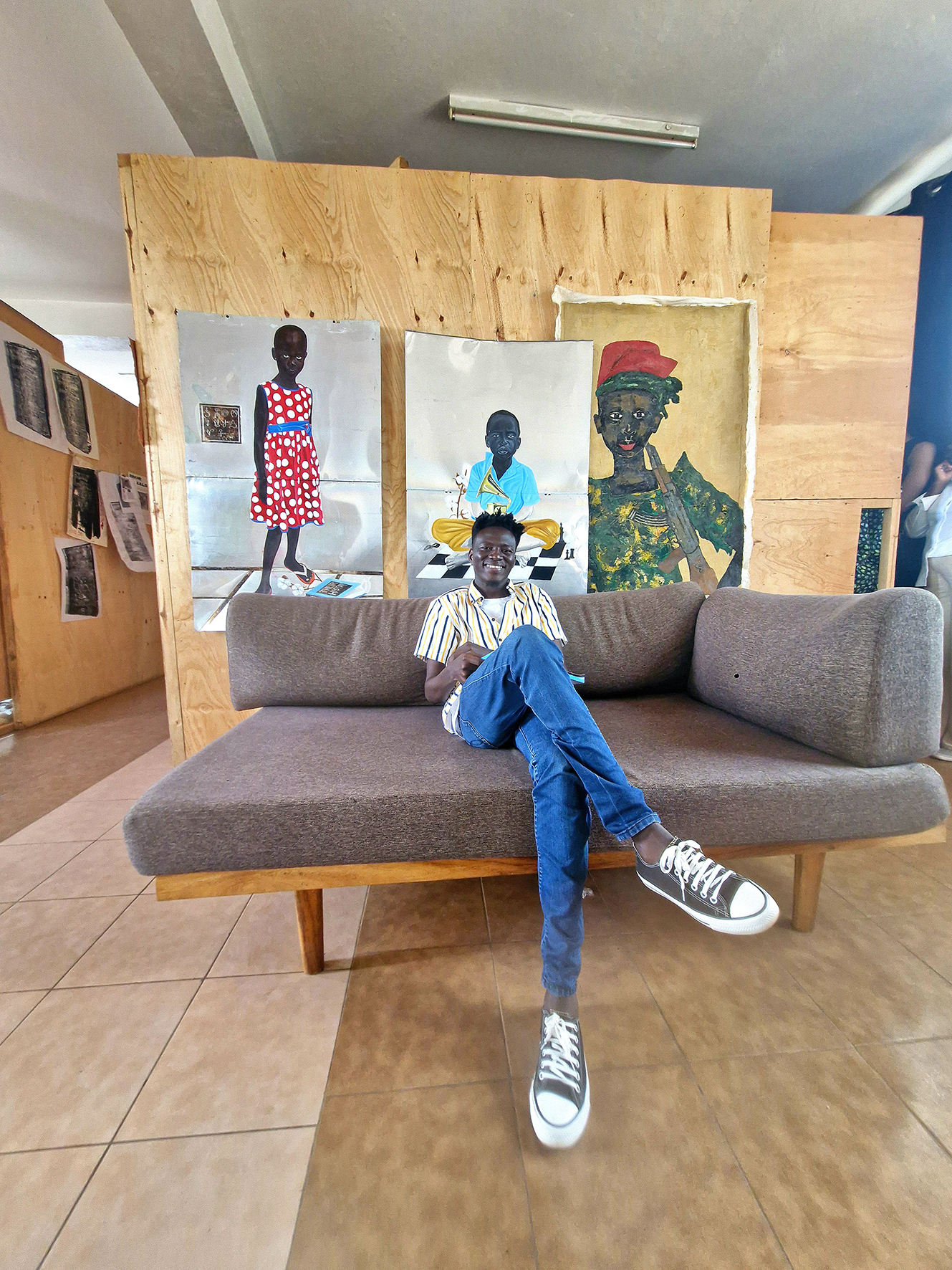
Community clean-ups take place as part of our members’ meetups. Our membership programme costs approximately BRL150 a year, which is a nominal fee that artists also have the option of paying in installments. The costs of membership far exceed the fee, but membership is a signifier. Not as a badge of honour, though it could be if you wanted it to be, but as a commitment to community. Being a member means a greater level of investment in the success of 32° East. For artists who have been told by society, by their parents, by their friends that what they do doesn’t matter, being surrounded by a community of their peers, that they can learn from and grow with is incredibly affirming. Each members’ meet-up is hosted by a different member of the community, giving people a safe space to practice their public speaking skills, and granting them the responsibility of welcoming others to 32 and helping them feel comfortable.
With our programmes, we constantly strive to respond to our environment and political context. Uganda passed one of the harshest anti-homosexuality laws on record, so we work to ensure our space is inclusive, and queer communities can not just feel safe here but can actively contribute because that is what happens when you belong.
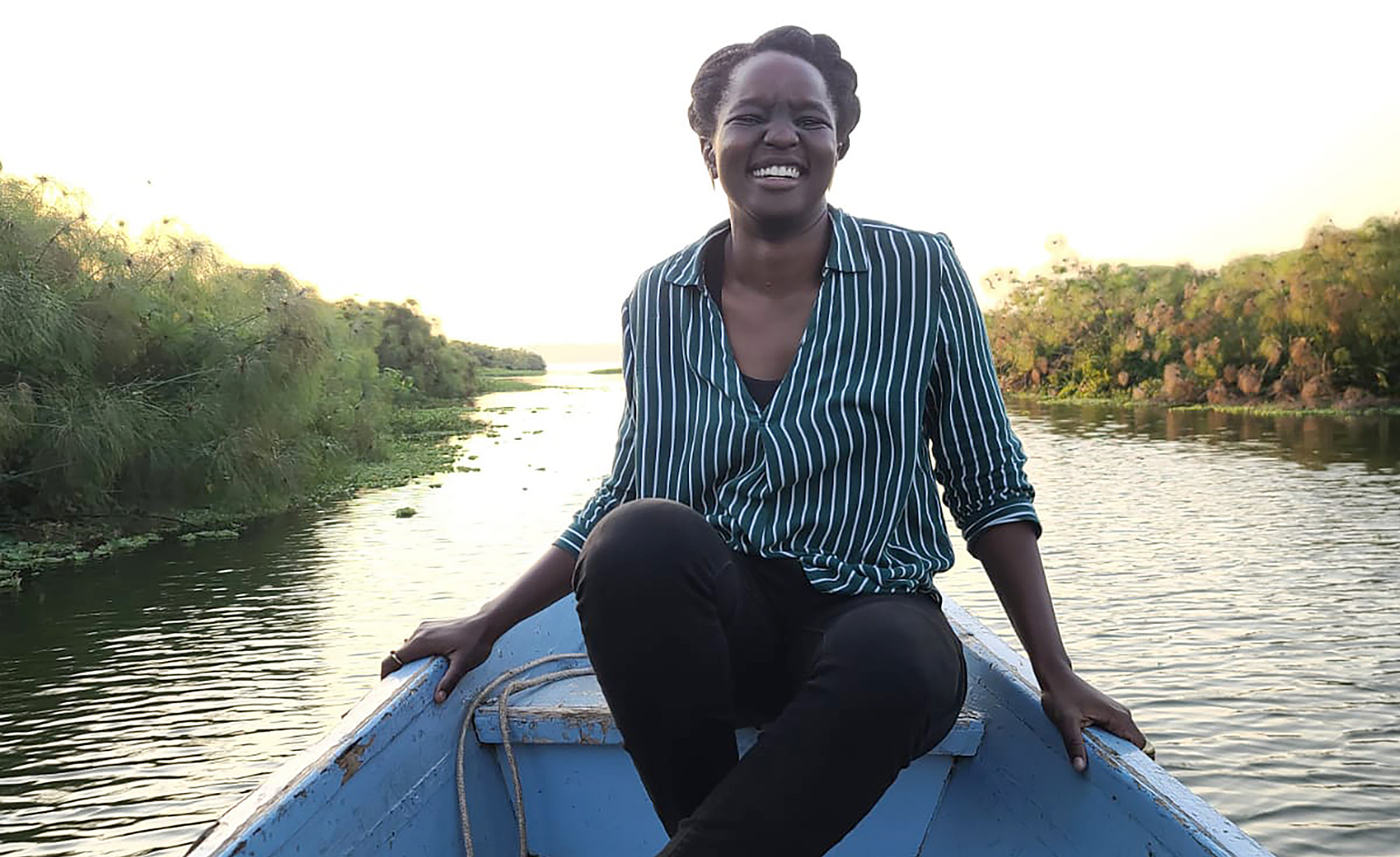
Teesa Bahana
Regionally, with Sudan experiencing one of the largest humanitarian crises of our times, we were very proud to host what we termed the Landing Residency, specifically to support artists who had recently migrated to Uganda from Sudan. A studio is a powerful place for agency, especially when so much has been taken away from you. Many of these artists had to leave everything behind. Having a place to paint, to tell stories and reclaim the story being told, is about One of my favourite moments of the residency I wasn’t even around for, when the artists hosted their friends and community for a day to celebrate the revolution and Sudanese culture.
Through our Teach-in series and Zine Club, we also provide a place for artists to work through questions and grief concerning the genocide in Palestine, and how the violations of international humanitarian law in Sudan and the Democratic Republic of Congo are interconnected. Our membership in networks such as Arts Collaboratory and the Prince Claus Fertile Ground Network means that these aren’t just news items but ways to think more deeply about solidarity and collective liberation.