November de 2026
VA-BENE ELIKEM FIATSI (crazinisT artisT): RADICAL RESISTANCE AS A SITE OF ACTION
Luciane Ramos-Silva e Nabor Jr.
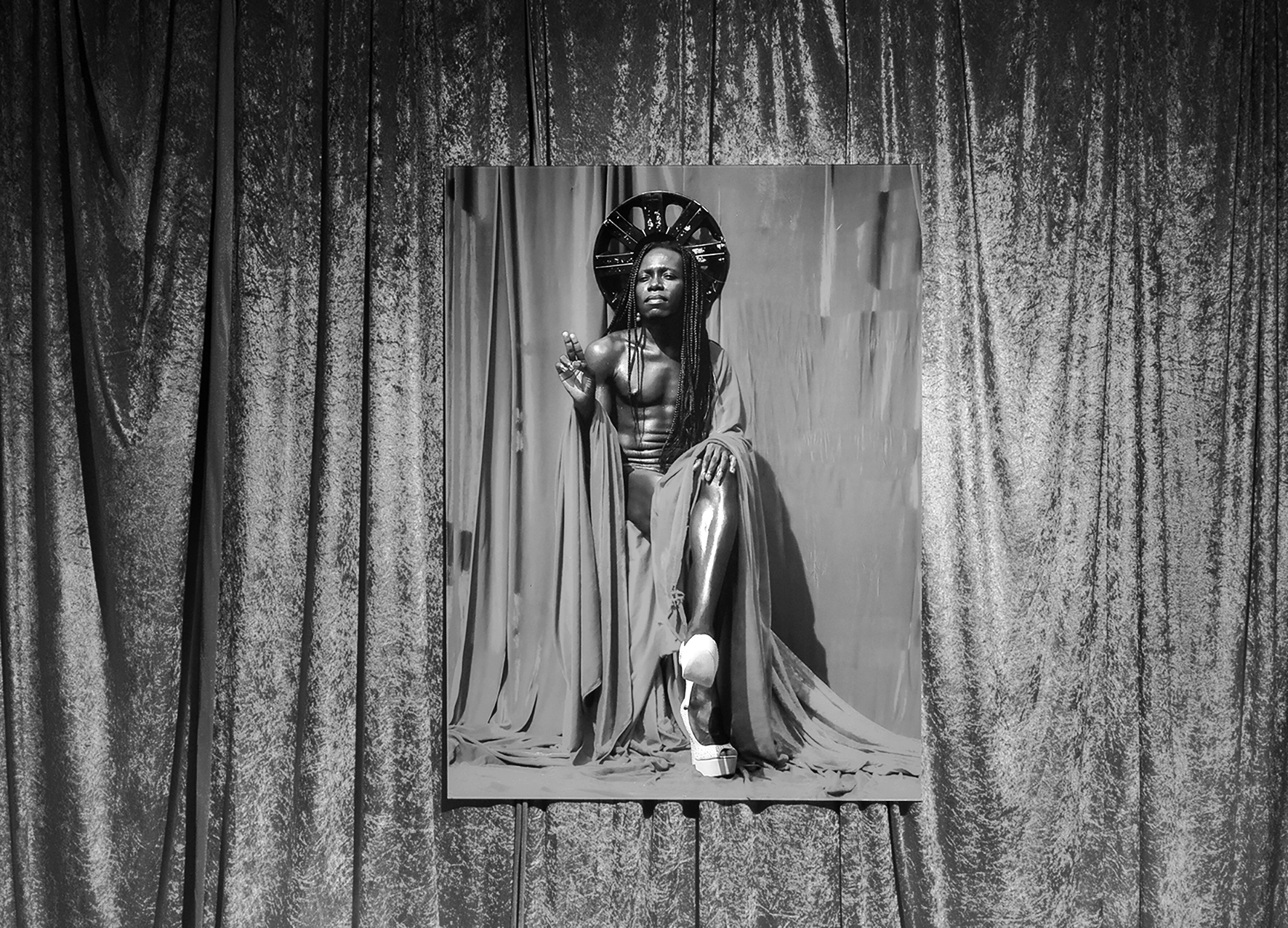
Cover: Photographic collaboration between Va-Bene Elikem Fiatsi (crazinisT artisT)
and Ashe Gardner. Courtesy of perfocraZe International Artist Residency.
It was in early December 2024, in Amsterdam, that we first encountered the Ghanaian multidisciplinary artist, curator, performer, mentor, and activist Va-Bene Elikem Fiatsi (1981), who also presents herself through the artistic persona crazinisT artisT. The idiosyncratic capitalization of her name already signals an existence that unsettles normative boundaries and classifications.
The poise and candour of her presence also lent her an unmistakable air of distinction. Not surprisingly, crowning her head was a sculptural braided hairstyle, intricately fashioned from wire. Only later would we grasp the depth and breadth of her practice, grounded in the movement between art and activism, and come to understand that the striking presence that had marked our first encounter was itself part of an artistic practice that makes the body a field of action.
The encounter took place at the headquarters of Framer Framed, a space devoted to contemporary art and visual culture, with exhibitions, seminars, and public programmes that engage with critical perspectives on the various forms of colonialism. Outside the institution, the temperature stood at 6°C. The overcast sky and the characteristic chill of early winter contrasted with the mild atmosphere we encountered inside the exposed-brick building. Indoors, another measure of temperature began to emerge.
We were attending a panel that examined the entanglements of art, politics, and decolonisation through situated experiences across the so-called Global South. Bringing together artists and researchers, the discussion considered the ways in which cultural initiatives might operate as sites for cultivating autonomy, safeguarding artistic freedom, and forging new forms of collective practice, while interrogating the power structures and epistemic frameworks inherited from colonial modernity.
To shift theoretical and conceptual discussions, traditionally centred on the realm of ideas, into the body and lived experience is one of the ways in which power structures can be meaningfully contested. This brings us directly to the radical nature of Va-Bene’s artistic practice. Her performances, far from being mere spectacles, are incisive acts of refusal—gestures that challenge norms and expectations through a body intimately acquainted with the precarity of existing in a place that is still not safe for trans people.
There are miles between Va-Bene’s experience and the particularities of the Brazilian context, yet certain symbolic affinities emerge. In a social landscape where trans people remain among those most exposed to violence and exclusion, her trajectory underscores the urgency of asserting other possibilities—of presence, belonging, and ways of inhabiting the world.
This interview is an invitation to dialogue, but also a tribute to Va-Bene’s artistic force and to the courageous and vital work through which body, presence, and creative practice become modes of resistance and invention.
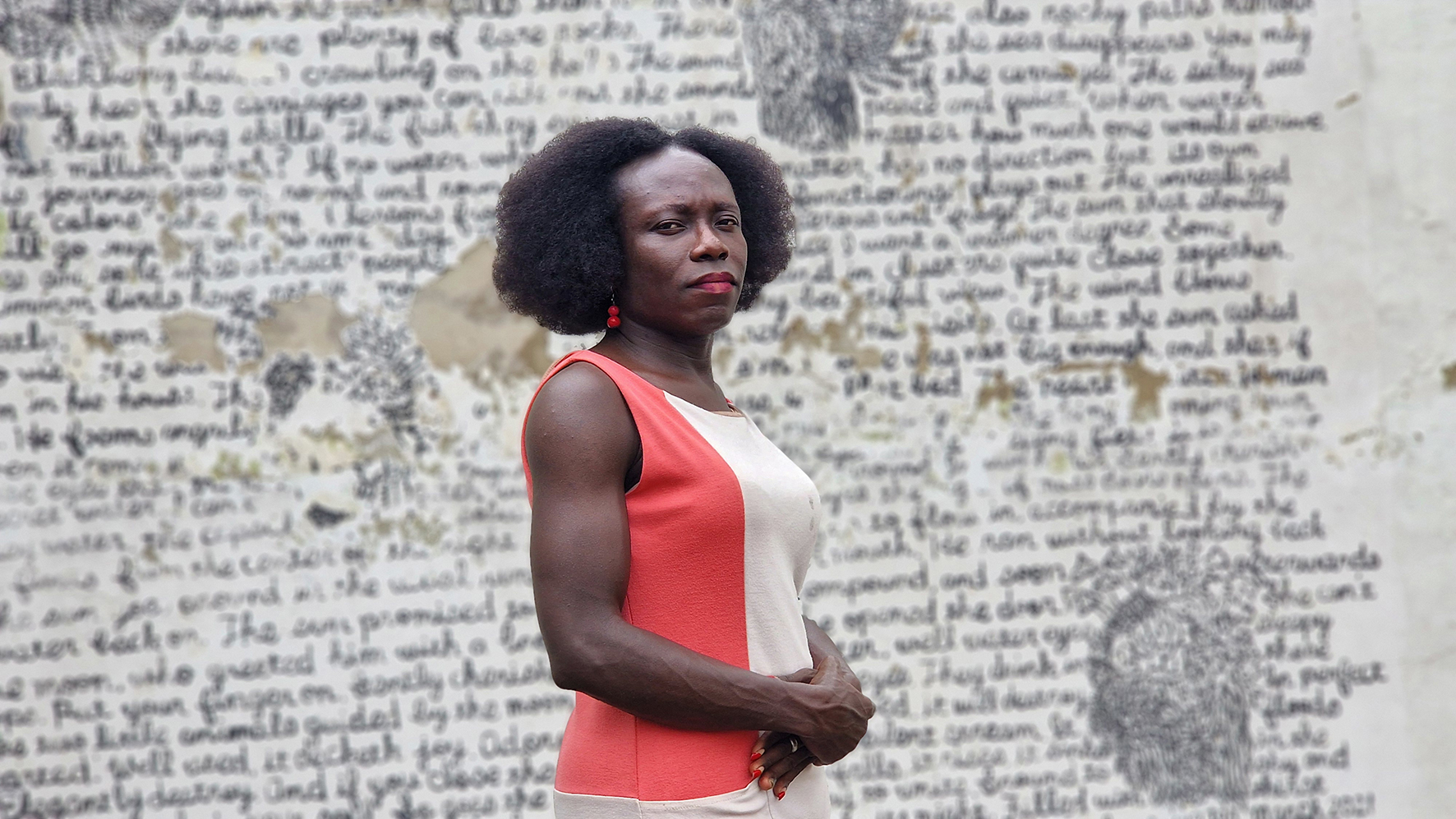
VA-BENE ELIKEM FIATSI (crazinisT artisT): self-portrait
MENELICK2ATO: VA- BENE, COULD YOU INTRODUCE YOURSELF AND SHARE A LITTLE ABOUT YOUR JOURNEY AS AN ARTIST BOTH IN GHANA AND INTERNATIONALLY, AND HOW YOUR ART AND LIFE INTERSECT?
VA-BENE: I’m Va-Bene Elikem Fiatsi, aka crazinisT artisT – a transwom and multidisciplinary artivist, curator, mentor, artvangelist, and philanthropist from Ghana. My journey began in a deeply religious community, where I trained as a teacher and served in the Ghana Education Service until 2010, while also pastoring in local churches. However, at 29, I took a transformative leap, leaving my roles to study art at Kwame Nkrumah University of Science and Technology, where I earned degrees in painting and sculpture.
I soon shifted from traditional art forms, removing my body from canvas onto the street to confront vulnerability and shed light on marginalised groups, particularly the queer community and alleged witches. This marked the beginning of my globally recognised performance practice. As a transwoman in a country where the LGBTQIA+ community faces significant challenges, I use my body to challenge gender stereotypes, social justice, disenfranchisement, and violence.
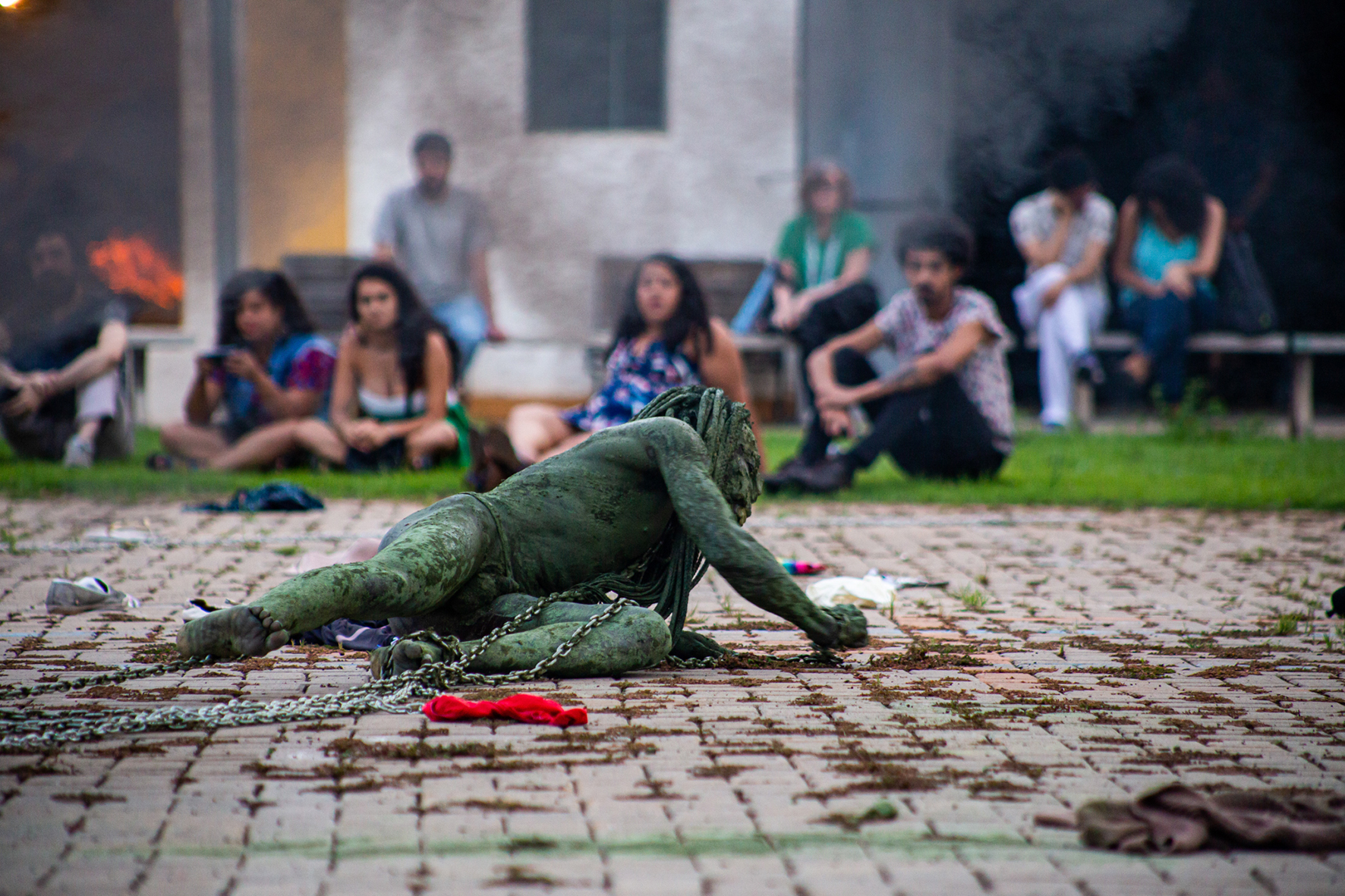
My work is characterized by powerful symbolism, including chains, mud, and nudity. I’ve performed globally, participating in prestigious residencies in several countries.
In 2018, I founded the perfocraZe International Artists Residency (pIAR) in Kumasi, Ghana, creating a safe space for the LGBTQIA+ community and fostering artistic collaboration. I am also the founder and artistic director of crazinisT artisT studiO (TTO), Our Railway Cinema Gallery (ORCG), Va-Bene Scholarship and Mentorship Residency Abroad and Trans African Ambassadors Network (TAAN). All of which aimed at radicalising the arts and promoting exchange between international and local artists, activists, researchers, curators, and critical thinkers.
MNLCK2ATO: THERE IS A STRONG AND GROWING MOVEMENT TOWARD RAPPROCHEMENT BETWEEN PEOPLES OF THE AFRICAN DIASPORA AND THOSE ON THE AFRICAN CONTINENT. IN THE CASE OF BRAZIL, IN PARTICULAR THERE ARE NOTABLE HISTORICAL TIES WITH DIVERSE CONTEXTS, SUCH AS BENIN, NIGERIA, MOZAMBIQUE, AND GHANA. REGARDING GHANA SPECIFICALLY CERTAIN CULTURAL CONNECTIONS STAND OUT, FOR EXAMPLE THE PRESENCE OF THE TABOM COMMUNITY SINCE THE LATE 18TH CENTURY AND THE DIPLOMATIC INITIATIVES THAT INTENSIFIED IN THE 1960S. THIS MUTUAL PURSUIT HAS FOSTERED NETWORKS OF ARTISTIC COLLABORATION, ARTICULATION AS WELL AS POLITICAL AND INTELLECTUAL EXCHANGE. HOWEVER, SIGNIFICANT GAPS STILL PERSIST IN HOW DIASPORA AND AFRICAN COMMUNITIES PERCEIVE AND RELATE TO ONE ANOTHER. COULD YOU SHARE YOUR THOUGHTS ON THIS?
VB: Well, the connection and the desire to bridge the gap between Africans on the continent and those in diaspora is a revolutionary effort toward decolonization and black liberation. However we must acknowledge all the bounces, complexities and layers established by colonialism while existing otherwise. We can not discuss any form of human struggle, vulnerabilities and oppressions without mentioning class, race, education and other forms of personality that must be questioned and reflected upon. I am so excited to see the growing need and urgency in African alliance across the globe recognising the long centuries of divide. Nevertheless, if we do not take into account our positionalities we may be reproducing what whiteness, colonialism and slavery has established. The people on the continent have suffered an impact that makes them feel less important or inferior to those from the diaspora as whiteness and the west has been used as a tool of stand of being. I therefore hope that as we reconnect, we will do so with sensitivity, empathy, solidarity and compassion.
MNLCK2ATO: WHAT ARE THE MAIN CHALLENGES FACED BY THE PERFOCRAZE INTERNATIONAL ARTIST RESIDENCY (PIAR) PROJECT? COULD YOU PROVIDE CONTEXT ON YOUR RELATIONSHIPS WITH DIFFERENT INSTITUTIONS AND THE GOVERNMENT? WE’D LIKE TO UNDERSTAND THE OBSTACLES AN ARTISTIC AND LGBTQIA+ COMMUNITY SUPPORT PROJECT FACES IN OPERATING AND REMAINING ACTIVE IN GHANA. AND WHAT ARE THE PROJECT’S MAIN ACHIEVEMENTS?
VB: The proposed anti-LGBTQ+ bill has significantly escalated the daily attacks and targeting of the trans community, especially those who have not undergone medical transition to align with binary cis identities. Among the most vulnerable are those in Ghana identified as Kojo Besia, oba-berima, and nyornugborme, whose categorizations often diverge from Western understandings of trans culture.
For instance, in September, Zongo leaders in Kumasi, the city where our residency is located, issued threats of violence against crossdressers, primarily Kojo Besia, attending wedding ceremonies. We have also observed a substantial increase in ambush and blackmail rape cases in the suburbs of larger cities, including Kumasi. Recently, trans individuals have been lured into isolated homes, hotels, and other locations under false promises of money, relationships, or desired items.
In spite of these challenges, we are actively engaged in multifaceted dialogue and exploring associated dangers through various projects and collaborations. Our ‘Radicalising the Art’ residential program, for example, offers a series of in-person, interactive workshops specifically for trans people every January. These workshops emphasize the inherent, often underestimated risks faced by the trans community. Our goal is to motivate and equip participants to strategically use their creative talents to effectively educate a wider audience, thereby empowering themselves and their communities against these threats. Through a blend of artistic expression, critical thinking, and practical skill-building, participants develop impactful strategies for raising awareness and fostering resilience.
MNLCK2ATO: THE CITY OF KUMASI, WHERE YOU LIVE AND WHERE YOUR CREATIVE STUDIO AND PIAR HEADQUARTERS ARE LOCATED, IS NOT ONLY THE SECOND LARGEST CITY IN GHANA BUT ALSO KNOWN AS THE HISTORIC CAPITAL OF THE ASHANTI KINGDOM. GIVEN THIS HISTORICAL FACT, LOADED WITH SYMBOLISM AND KNOWN WORLDWIDE AS AN EXAMPLE OF AFRICAN RESISTANCE TO EUROPEAN COLONIZATION AND FOR THE RICHNESS OF ITS CULTURE, DO YOU OBSERVE ANY ANCESTRAL ASHANTI INFLUENCE IN YOUR ARTISTIC PRACTICE OR WAY OF LIFE? HOW DO YOU ASSESS THE RELATIONSHIP OF THE ASHANTI KINGDOM, WHICH STILL EXISTS TODAY AS A CONSTITUTIONALLY PROTECTED TRADITIONAL STATE WITHIN THE REPUBLIC OF GHANA, WITH CONTEMPORARY LIFE IN KUMASI?
VB: In Ghana, I believe there isn’t a singular, isolated life experience tied to a specific region, though this can also be personal opinion and experience. Instead, we fluidly adapt and integrate into the new realities and traditions of wherever we find ourselves. I was born and raised as an Ewe in the Volta Region and moved to the Ashanti Region at 29, but my experience there was within the context of university life, which is vastly different from living in an Ashanti village with older generations and their potentially ancient traditions. I don not even speak their Twi, one of the Akan languages so my personal general experience could be limited to anglophonic familiarities.
Therefore, viewing the Ashanti Kingdom as a distinct cultural experience to be sought out feels both exoticized and like a form of “diasporic masturbation.” I say this because Ghanaian life has become so Europeanized since colonialism. This unified identity explains why Ghana exists as a single nation, rather than a collection of separate kingdoms. However, it’s important to recognize that distinct traditions—such as Ashanti, Ewe, Damba, and Krobo cultures—do exist. To truly understand and experience these differences, one must actively seek out specific cultural contexts, like funerals, traditional marriages, and rituals, especially given the significant influence of Christianity on these practices today.
MNLCK2ATO: TELL US ABOUT YOUR EXPERIENCE IN BRAZIL IN 2019, WHEN YOU CAME AT THE INVITATION OF FAN (FESTIVAL DE ARTE NEGRA DE BELO HORIZONTE).
VB: I must confess, when I first arrived in Brazil in 2019, it felt like a homecoming. I can’t explain what happened to my spirit, but it was as if I had lived there before, despite it being my very first visit. My initial stop was in Rio Preto for FiTrio.
A few months later, I returned to Belohoronte. When I shared my profound experience and feelings with both Brazilians and foreigners, I was immediately cautioned against visiting Bahia. I was told I wouldn’t want to return to Ghana if I did, because I hadn’t yet truly experienced what I claimed to feel in Rio and Belo. I came for the festival and found incredible crews and families to collaborate with. However, I am acutely aware that temporary visits can mask the full reality, censoring the experiences of those who live there permanently. This same dynamic can be observed when any foreigner visits Ghana, potentially missing or not encountering the daily violence faced by the queer community.
MNLCK2ATO: YOUR PUBLIC PERFORMANCES (WITH PHYSICAL MANIFESTATIONS OF PAIN, IMPRISONMENT, RED PAINT, CHAINS, HANDCUFFS, AND RESTRICTED MOVEMENT), WHICH INVARIABLY ADDRESS VIOLENCE AGAINST BLACK AND LGBTIQA+ COMMUNITIES, ARE VISUALLY STRIKING AND INTENTIONALLY RADICAL. WHY DID YOU CHOOSE PERFORMANCE AS YOUR EXPRESSIVE LANGUAGE? AND HOW IS THIS POLITICAL BODY, WHICH CHALLENGES NORMATIVE GENDER PERSPECTIVES, RECEIVED IN YOUR DAILY LIFE AS AN INTERNATIONAL ARTIST?
VB: My identity as an activist, artist, performer, and “artivangelist” is inseparable from my life; it is all that I am and live for. I believe artists are the spiritual backbone and healers of society, which is why the art I create with my body must be purposeful and meaningful to both myself and my community. It embracing those discomfort that offers us healings and libration
The pain I manifest in my performances represents radical resistance, inviting witnesses to confront our collective struggles, suffering, and mortality. It’s an invitation for the audience and anyone encountering my work to reflect and contemplate our transient existence. Simultaneously, symbols like chains, public crucifixions, and blood serve as crucial reminders of our ancestors’ wounds and the violence they endured. These historical traumas are, unfortunately, re-enacted today through Christian ideologies and far-right policies. This is my calling,
MNLCK2ATO: HOW DID YOU EXPERIENCE AND NAVIGATE THE TRANSFORMATIONS OF YOUR GENDER IDENTITY IN THE CULTURAL AND RELIGIOUS CONTEXT OF GHANA, MARKED BY COLONIAL LEGACIES AND CONSERVATIVE NORMS? WHAT PATHS OR STRATEGIES WERE AVAILABLE TO YOU IN THIS PROCESS?
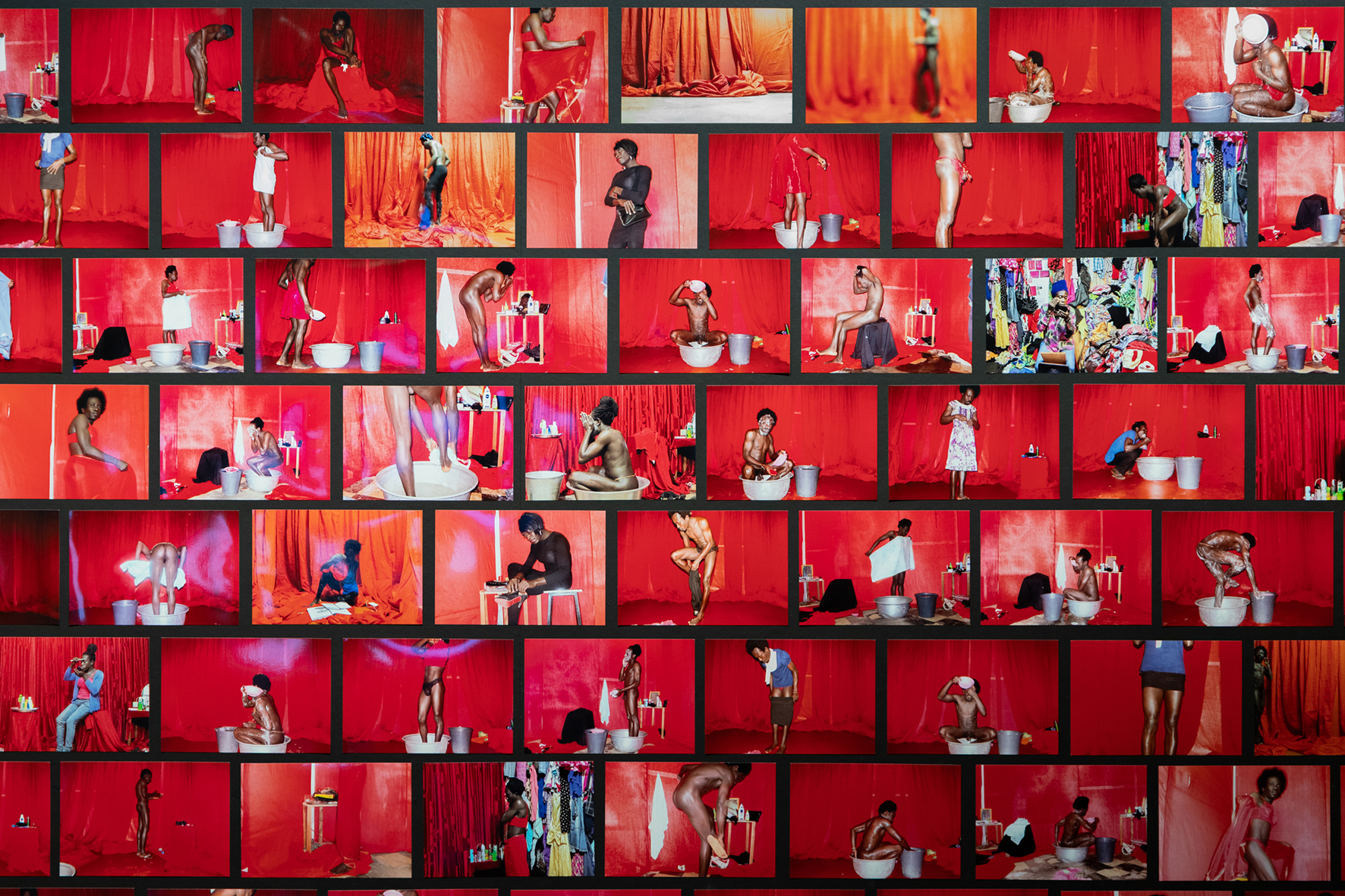
VB: I metaphorically “declared myself dead” to confront the challenges of a transitional journey, the horrors of anti-gender sentiment, and my radical artivism. This was in anticipation of a future of “untold horrors” that, a decade later, materialized as an anti-LGBTQIA+ Bill.
Performance and public intervention immediately became the tools through which I shaped my own identity and rituals rituals of becoming.
I chose to leave the church, a decision that carried the risk of alienating family and friends. This was particularly difficult given the importance of family in Ghanaian culture, a fear many share. However, in the years since, I’ve cultivated a large, chosen family both locally and internationally, and some of my lost family and friends have even returned including my siblings and cousins.
MNLCK2ATO: IN ADDITION TO INTERNATIONAL SOLIDARITY, DOES THE LGBTQIA+ COMMUNITY IN GHANA HAVE ANY INTERNAL POLITICAL OR INSTITUTIONAL SUPPORT THAT PUBLICLY POSITIONS ITSELF AGAINST THE COUNTRY’S ANTI-LBGTQIA+ POLICY?
VB: Despite international support against the anti-LGBTQIA+ bill, the queer community in Ghana lacks significant internal political and institutional backing. However, a strong coalition of 18 professors, well known as ‘the big 18’ including the prominent Emerita Professor Takyiwaa Manuh, has openly condemned the bill and advocated for queer rights as human rights. Additionally, few influential allies from the music and celebrity spheres have spoken out against the bill and attacks on the queer community.
Ghana’s political landscape presents a unique challenge. Unlike many so-called progressive nations, both major political parties are heavily influenced by conservative ideologies and the church. This makes it difficult to secure visible and vocal legal political representation for the LGBTQIA+ community, either within or outside parliament, though discrete supporters do operate behind the scenes.
MNLCK2ATO: CAPITALISM, BY SUBJECTING ALL SPHERES OF LIFE TO MERCANTILE LOGIC, ALSO CLEARLY PERMEATES THE ARTS. THIS COMPLEX DYNAMIC CAN COMPROMISE ARTISTS’ CRITICAL THINKING AND CREATIVE FREEDOM. AS A CURATOR, WHAT IS YOUR PERCEPTION OF THE ARTS LANDSCAPE IN GHANA? ARE THERE ARTISTS WHO, EVEN WITHIN THIS SYSTEM, CHOOSE TO CHALLENGE ITS STRUCTURES, CONFRONTING, FOR EXAMPLE, THE COLONIAL LEGACY AND FORMS OF DISCRIMINATION?
VB: Money, often seen as a necessary evil in a world reshaped by colonialism, isn’t synonymous with capitalism. While trade is ancient, capitalism, in my view, is a system built on exploitation, power, and control.
Ghanaian art is experiencing a surge of urgency and political ambition, actively countering oppressive systems and questioning what we can not in ordinary spaces. This doesn’t mean artists don’t earn from their work; rather, diverse categories of artists are emerging. Some prioritize sales for survival, or luxurious lives, while others focus on making their voices heard, regardless of financial gain or struggles. Neither approach is to be judged. The real threat lies with those who exploit either group for personal power, control, and wealth hoarding.
Ghana’s class system creates a divide, granting some artists more privilege and economic stability, whether their art sells or not. Though I’ve never sold an art piece, I have the privilege to sustain myself and support many other young artists and non-artists through my practice. This is possible because I have alternative income streams from performances, lectures, art talks, and panels as an internationally acclaimed artist. Something of course I worked for over the years, but yes I have become privileged than many of my queer folks. Such opportunities are often inaccessible to many young Ghanaian artists unless they commercialize their art to survive which can of course impact the way they create and they create to suit the market. Understanding these dynamics is very important for our common struggle in order to be compassionate and empathetic towards everyone.
+
crazinisT artisT